Print this handout for your ākonga or save it as a PDF to share with whānau.
Identity Map Interview Handout
He aha te kaupapa? · Why this matters
This interview captures the stories, values, and hopes that your whānau carry. You will kōrero with a whānau member (parent, caregiver, grandparent, auntie/uncle, older sibling, or chosen family member) and map their insights alongside your own identity work.
Bring this handout to your interview, record short notes in the spaces provided, and return with one action you will take to honour the kōrero. Mauri tū, mauri ora!
Use manaakitanga: listen with care, thank your whānau member, and record only what they are happy to share.
Interviews can be held in te reo Māori, English, or any language spoken in your whare.
If kanohi ki te kanohi is not possible, a phone, video call, or voice note exchange works well.
Who I am interviewing
Name & relationship
Interview date & place
Kāinga, marae, phone, zoom...
Part 1 · He whakarite · Preparing for the kōrero
Before your interview, note what each anchor means to you so you can open the conversation and set the tikanga.
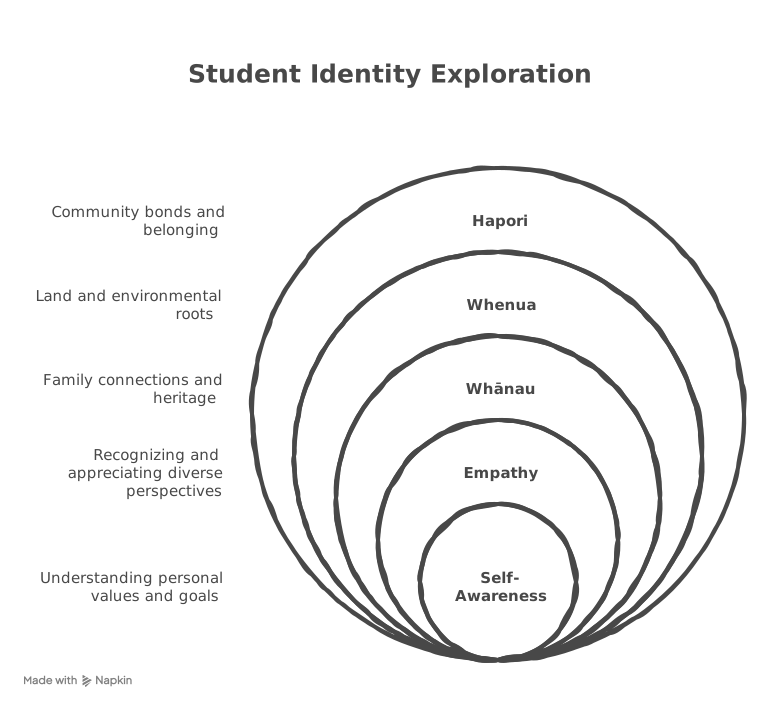
Whānau
Who walks beside me and gives me strength?
Whenua
Which places anchor me? How do I stay connected?
Hapori
Who is in my circle of care? How do we look after each other?
Mentors & Aspirations
Who guides me today and what futures am I working toward?
Part 2 · Ngā Pātai Matua · Guiding questions
Use these pātai during your interview. Jot keywords, full sentences, or sketch icons that remind you what was shared.
Whānau · Family
Who or what gives your whānau strength when you face challenges?
What tikanga or practices connect you back to your tūrangawaewae?
Complete together: “Ko ______ taku ______. He taonga ki ahau nā te mea ______.”
Whenua · Land
Describe a place that is special to you and our whānau. What makes it significant?
How does your connection to the land influence your values and beliefs?
Hapori · Community
How do you show manaakitanga to others in our community?
What role do you play in our hapori? How do you contribute?
Mentors
Who has been a significant mentor in your life? What qualities do you admire in them?
Complete together: “When ______ stands beside me, I feel ______ because ______.”
Aspirations & Ahi Kā
What dreams do you have for future generations?
What traditions or values do you want to keep alive? “To keep our ahi kā burning, I will ______.”
Complete together: “This quote — ‘__________’ — guides my decisions for ______.”
Part 3 · Whakakapi · Summarising the kōrero
Summary of my whānau member’s identity
Action I will take to honour their kōrero
Part 4 · Mahere mahi · Action plan for this week
Design one way you will keep the kaupapa of this interview alive. Who will you share with? What will you do differently at kura, kāinga, or in your hapori?
My commitments for this week
Person I will share my learning with:
Action I will take this week:
How I will show the impact (photo, audio, written reflection, artwork):
Icon & Pattern Bank · Kupu ā-ataata
“Ehara taku toa i te toa takitahi, engari he toa takitini.” — My strength is not that of an individual, but that of the collective.
Draw visual symbols from this kōrero (and add your own) to show the connections you want to carry forward.